

Wedding locations in Italy: how to choose the right one
Tuscany, Lake Como, Capri or the Amalfi Coast? A photographer’s honest guide to the places, the paperwork and the questions that matter.
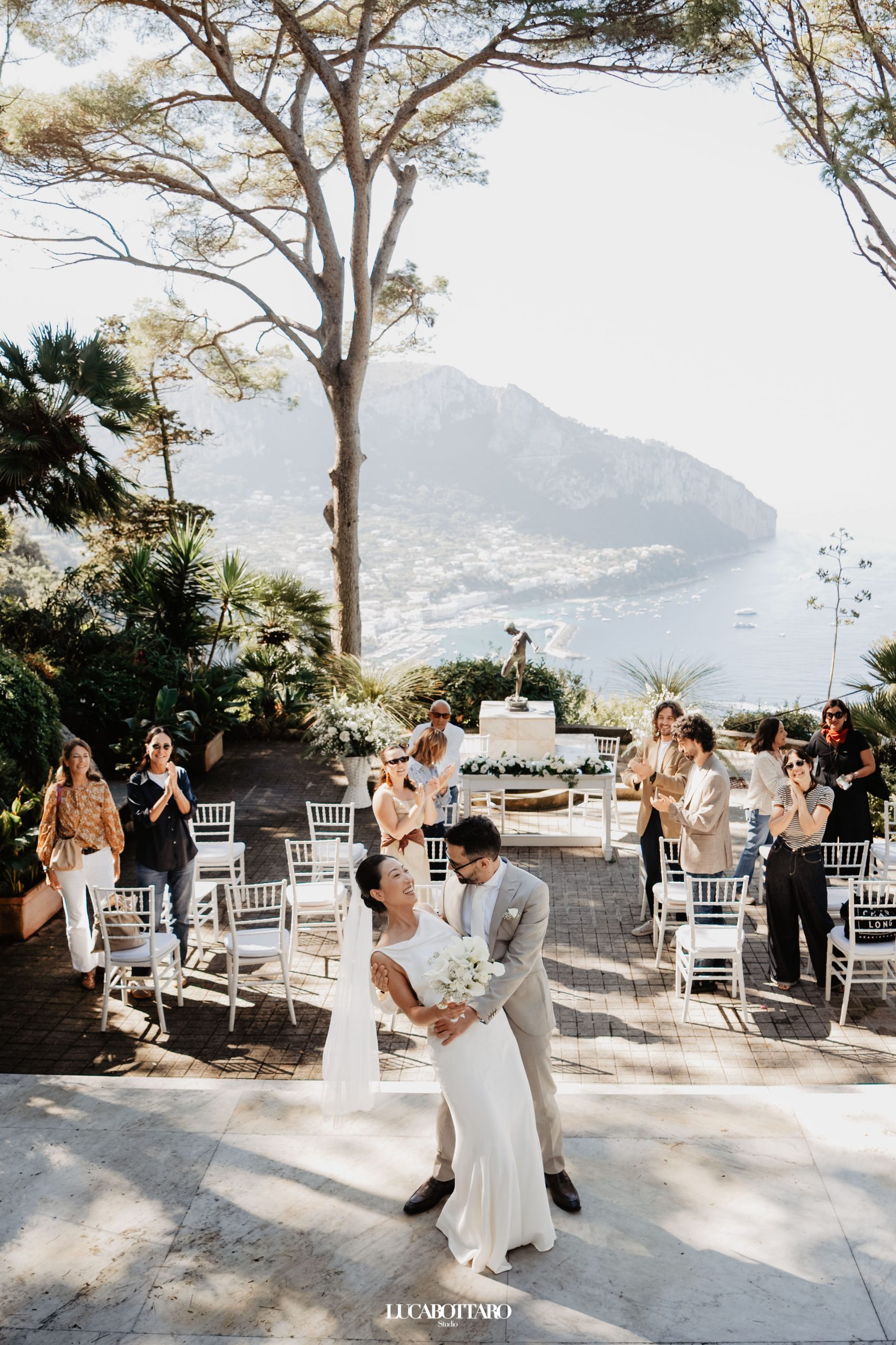
Choosing among wedding locations in Italy is the biggest decision you will make from abroad. Above all, it shapes your budget, your guest list and the look of every photograph.
I am a wedding photographer based in Campania. Every year I work at weddings across Italy, many of them for couples who fly in from the UK, the US and beyond. As a result, the same questions keep arriving in my inbox. Can we marry legally in Italy? Which of the wedding locations in Italy suits us? How much will it cost? When should we go?
This guide answers those questions in plain language. Moreover, it shows the places through a photographer’s eyes, because light and logistics decide how a wedding day feels. For a wider overview of planning, read my guide to destination weddings in Italy.
- Residency: you do not need to live in Italy to marry there.
- Best months: May, June, September and early October.
- Book ahead: twelve months or more for high season.
- Biggest cost: the venue and the reception, often half of the total budget.
- Islands: Capri is the most spectacular choice, and the most demanding to organise.
- Logistics: simplest in Tuscany, Umbria and the lakes near Milan, and most demanding on Capri and the Amalfi Coast.
Can you legally marry in Italy as a foreigner?Three ceremonies, one paperwork question
Yes, you can. In fact, Italy does not ask foreign couples to live in the country or to stay for a minimum period. However, the rules depend on the type of ceremony, so it helps to understand the three main options first.
Civil ceremony
A civil ceremony is led by the mayor or another official. Because the language is Italian, you will need an interpreter. Still, the ceremony itself is short, usually around twenty minutes. In addition, many town halls license private venues, which means you can marry in a villa or castle and still be legal.
Catholic ceremony
A Catholic wedding in a church also has legal effect in Italy. However, at least one of you must be Catholic, and the parish will ask for extra documents. For this reason, you should contact the priest very early.
Symbolic ceremony
A symbolic ceremony, or a religious rite outside the Catholic church, has no legal value on its own. Therefore, many couples sign the legal papers at home. Then they hold a symbolic ceremony in Italy, with the same views and the same emotion. It is a popular choice because it removes most of the paperwork. Besides, it gives you total freedom over the setting.
Documents vary by nationality, and the rules change from time to time. Typically, you need a certificate of no impediment or an equivalent statement, translated and legalised. For official guidance, start with the UK government page on marriage abroad or ask your own consulate. Afterwards, your venue or planner can confirm the steps with the local town hall.
Wedding locations in Italy: the main regions comparedNotes from behind the camera
Italy is not one destination. Instead, each region offers a different landscape, a different light and a different kind of logistics. Below you will find the places couples ask about most, with notes from behind the camera.
Tuscany
Tuscany is the classic choice among wedding locations in Italy. First, you will find farmhouses, medieval villages and vineyards, with cypress-lined roads between them. Distances are manageable, and there are many venues for every budget. For these reasons, it is the easiest region for a first-time planner.
I have photographed weddings in the Val d’Orcia, at Villa Grabau near Lucca and at the Fattoria degli Usignoli. Each place has a different mood. The Val d’Orcia is open and cinematic, while a Lucca villa feels formal and green.
Soft evening light over the hills is the main gift here. Therefore, plan the portraits for the last hour before sunset, and keep a rain plan for the ceremony.
Lake Como and the northern lakes
Lake Como is all about glamour. For example, think grand villas, private jetties and a boat arrival for the couple. It is about an hour and a half to two hours from Milan. On the other hand, prices are high, and space on the lakeshore is limited.
Lake Garda is usually cheaper than Como. Meanwhile, Lake Orta is smaller and much quieter. I photographed a wedding at La Darbia on Lake Orta, and the setting is calm and elegant. As a result, it suits couples who want elegance without the crowds.
Water gives beautiful reflected light, especially in the morning. However, boat transfers need generous time in the schedule, so I always ask for a clear timeline.
The Amalfi Coast and Sorrento
The Amalfi Coast is the most dramatic of all wedding locations in Italy. Cliffs, lemon terraces and the sea fill every frame. Ravello, Positano and Sorrento are the best-known names. The airport in Naples is about an hour away.
Logistics deserve respect here. Roads are narrow and winding, parking is scarce, and many venues have stairs. In addition, older guests may find the terrain tiring. Capri is even more demanding, so it has its own section below. On the Sorrento coast I have worked many times at the Grand Hotel Cocumella, at Hotel Bellevue Syrene and at Villa Angelina. For a full story, read about the Grand Hotel Cocumella.
Terraces facing the sea give you the best sunsets in Italy. Because the stairs slow everyone down, I plan fewer locations and more time in each one.
Campania beyond the coast
Many couples overlook the interior and the Cilento. Yet Campania also offers castles, historic villas and quiet hill towns, often at a gentler price. I documented a wedding at Castello Rocca Cilento and another at the Castello di Limatola. Indeed, both are real castles with real history, and neither is a theme-park imitation.
Puglia and Umbria
Puglia is famous for its whitewashed towns and its fortified farmhouses, called masserie. Umbria, in comparison, feels like Tuscany with fewer visitors and lower prices.
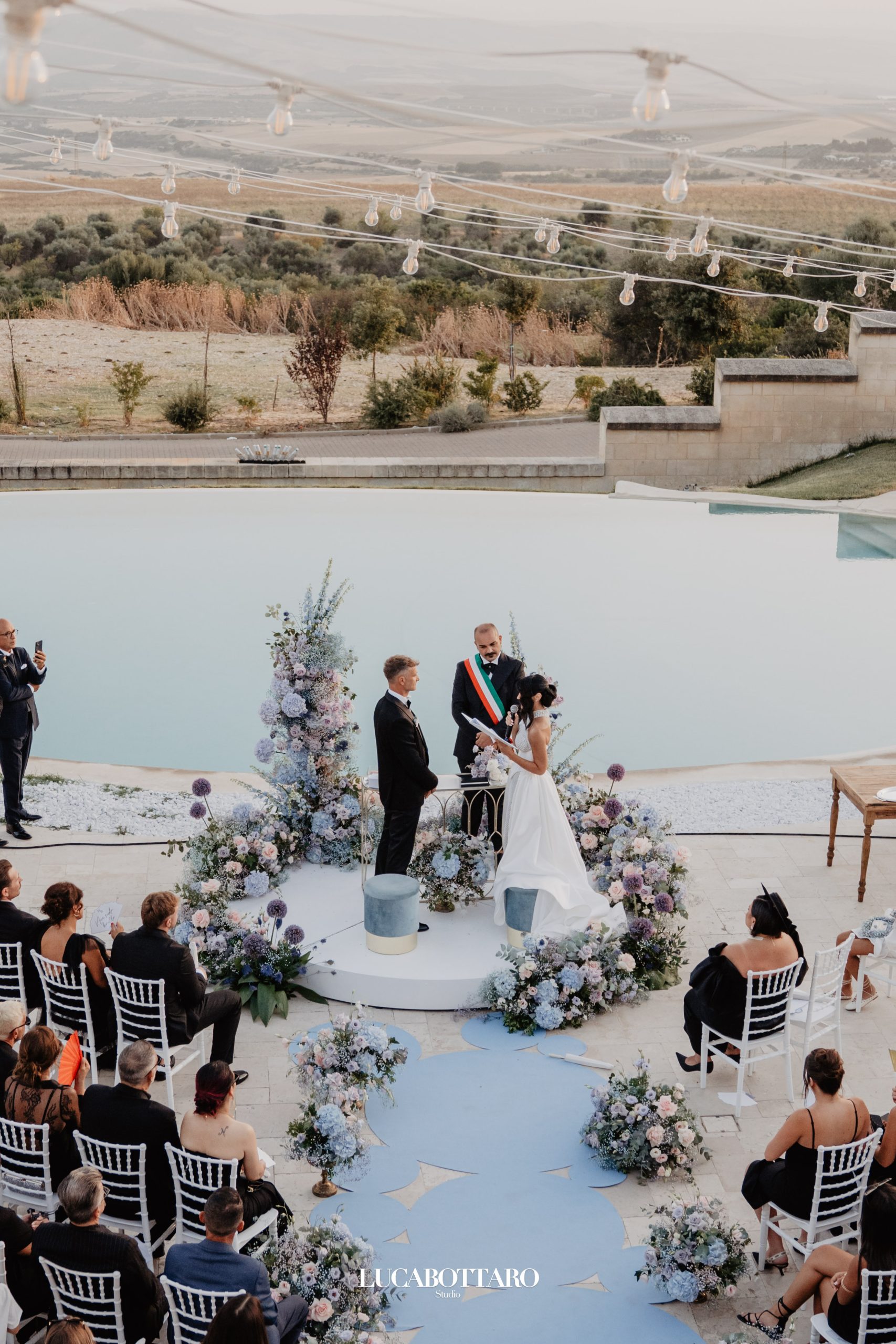
Island wedding locations in Italy: Capri, Ischia and beyondWhere every arrival happens by boat
An island wedding feels different from anything on the mainland. Everyone arrives by sea, the day stays contained, and your guests share the same small adventure. As a result, the mood is intimate and relaxed. However, islands need more planning, because every delivery, supplier and guest depends on a boat.
Capri
Capri is the most glamorous island among the wedding locations in Italy. White limestone cliffs, the Faraglioni rocks, bougainvillea terraces and tiny piazzas create a setting that needs very little styling. It is also the island I know best through my own work. I have photographed weddings in Capri town, in Anacapri and at Villa Lysis.
Guests take a fast ferry from Naples or Sorrento. From the port at Marina Grande, they continue by funicular, small taxi or on foot. Roads are narrow and traffic is limited, so luggage and equipment move slowly. Therefore, ask your planner about porters and shuttle timing.
I documented Gianna and Brett’s wedding on Capri, and it taught me one rule. Time behaves differently on the island. Boats, steps and lanes all slow the day down, so a schedule that looks relaxed on paper can feel tight. For this reason, I keep the timeline simple and the number of locations small.
- Getting there: fast ferry from Naples or Sorrento, then funicular, taxi or a short walk.
- Best for: small and medium guest lists, and couples who want a dramatic setting.
- Budget: expect a premium, because almost everything is shipped in by boat.
- Plan: arrive the day before, because rough seas can delay ferries.
- Crowds: in high season, day visitors fill the lanes at midday.
Take your portraits early in the morning or late in the afternoon. The light is softer then, and the lanes are almost empty. Terraces open to the sea give wide skies, and the whitewashed walls bounce light back onto faces.

Ischia and Procida
Ischia is the largest island in the Bay of Naples. It is known for thermal gardens, lush vegetation and a slower rhythm than Capri. In addition, prices are often gentler, and ferries from Naples run frequently. Many couples choose it for the combination of beach, spa and hillside views.
Procida is much smaller. Its pastel houses and its fishing harbour create a colourful, quiet backdrop. Because it has fewer large venues, it suits intimate weddings best.
Sicily and Sardinia
Sicily and Sardinia are the two large islands. Each has its own airports, so guests can fly in directly instead of taking a ferry. Sicily offers baroque towns, Taormina and the view of Mount Etna. Sardinia, by contrast, is known for its beaches and the Costa Smeralda. Both are worth considering if you want an island feel with simpler logistics.
Wedding locations in Italy: which type of venue suits you?Villas, castles, farmhouses and hotels
After the region comes the venue. Indeed, the type you choose affects the mood, the rules and the budget. The most common options are these:
Historic villas offer gardens, frescoed halls and a formal feel. Castles bring stone walls and drama, and some allow exclusive use for the whole day. Farmhouses and masserie give a relaxed, rustic atmosphere with outdoor dining. Grand hotels keep everything under one roof, which is handy for guests. Private estates offer total privacy but need more outside suppliers.
Whatever you choose, always ask whether the venue is exclusive. Otherwise, if other events share the property, you may lose privacy and good photo locations.
When is the best time to get married in Italy?Light, heat and ferries
May and June are green, warm and full of flowers. Meanwhile, September and early October give you golden light and slightly lower prices. In addition, the sea is still warm at this time of year. Each of the wedding locations in Italy has its own best weeks, but some rules apply everywhere.
July and August can reach thirty to forty degrees in many regions. Guests tire quickly in that heat, so evening ceremonies work better. Also avoid the week of 15 August, known as Ferragosto, when much of the country is on holiday. Finally, remember that coastal ferries and boat services reduce their timetables from late September.
As a rule, book twelve months ahead for high season, because the most popular venues often sell out earlier than that.
How much do wedding locations in Italy cost?A framework, not a quote
The honest answer is that it depends on the guest list. Fortunately, planners publish ballpark figures that give a useful framework. For instance, a small wedding of fifteen to thirty guests often falls between roughly 18,000 and 35,000 euros. A larger event of eighty to one hundred guests can start around 45,000 euros and go well beyond 90,000. However, these are indicative ranges only, and your quotes will vary.
The venue and the reception usually take forty to sixty percent of the budget. Capri and Lake Como carry a premium because of location and transport. By contrast, a weekday wedding or a shoulder-season date can lower the price noticeably.
Finally, do not forget the smaller costs. Transfers, legal fees, overtime, accommodation for suppliers and the planner’s fee all add up. If you are comparing photographers, my pricing and style guide explains what is included in my service.
How do guests actually get there?The part couples underestimate
Logistics are the part couples underestimate when comparing wedding locations in Italy. First, start with the nearest airport and count the real driving time, not the distance on the map. For example, Naples airport is about an hour from the Amalfi Coast, while Milan is up to two hours from Lake Como.
Next, think about your guests. For instance, elderly relatives and young children need short transfers and step-free access. If the venue sits on a hill or a cliff, arrange shuttle buses. Moreover, share a simple travel plan with your guests several months before the wedding.
Questions to ask every venue before you bookCopy, paste, send
A beautiful website tells you very little. Therefore, these questions help you compare wedding locations in Italy fairly. Copy them into an email to each venue.
- Do we have exclusive use of the property for the whole day?
- Are other weddings or events scheduled at the same time?
- Can we hold a civil ceremony here, and is the venue licensed?
- What is the music and noise curfew?
- What is the rain plan, and where does the ceremony move?
- Is there on-site accommodation, and how many guests can sleep here?
- Can we bring our own caterer, florist and suppliers?
- Are there extra fees for overtime, cleaning or outside vendors?
- Can the couple get ready at the venue?
- Is the property accessible for guests with reduced mobility?
- May we see the draft contract before paying a deposit?
What a photographer looks for in wedding locations in ItalyLight, space and time
I judge a venue by three things: light, space and time. First, light decides the mood of every portrait. Second, space lets me work without crowding your guests. Third, time is the factor most couples forget.
A common mistake is a tight schedule. For example, a ceremony at five o’clock in July leaves very little golden light. Likewise, a long transfer between ceremony and reception eats into portrait time. When I plan a day, I walk through the order of events with the couple. Then we move things until the light works.
My approach is documentary. Instead of staging scenes, I follow the day as it unfolds. I cover everything from the preparations to the last dance. That style needs venues with room to move and a calm pace. You can see how it looks in real weddings below.
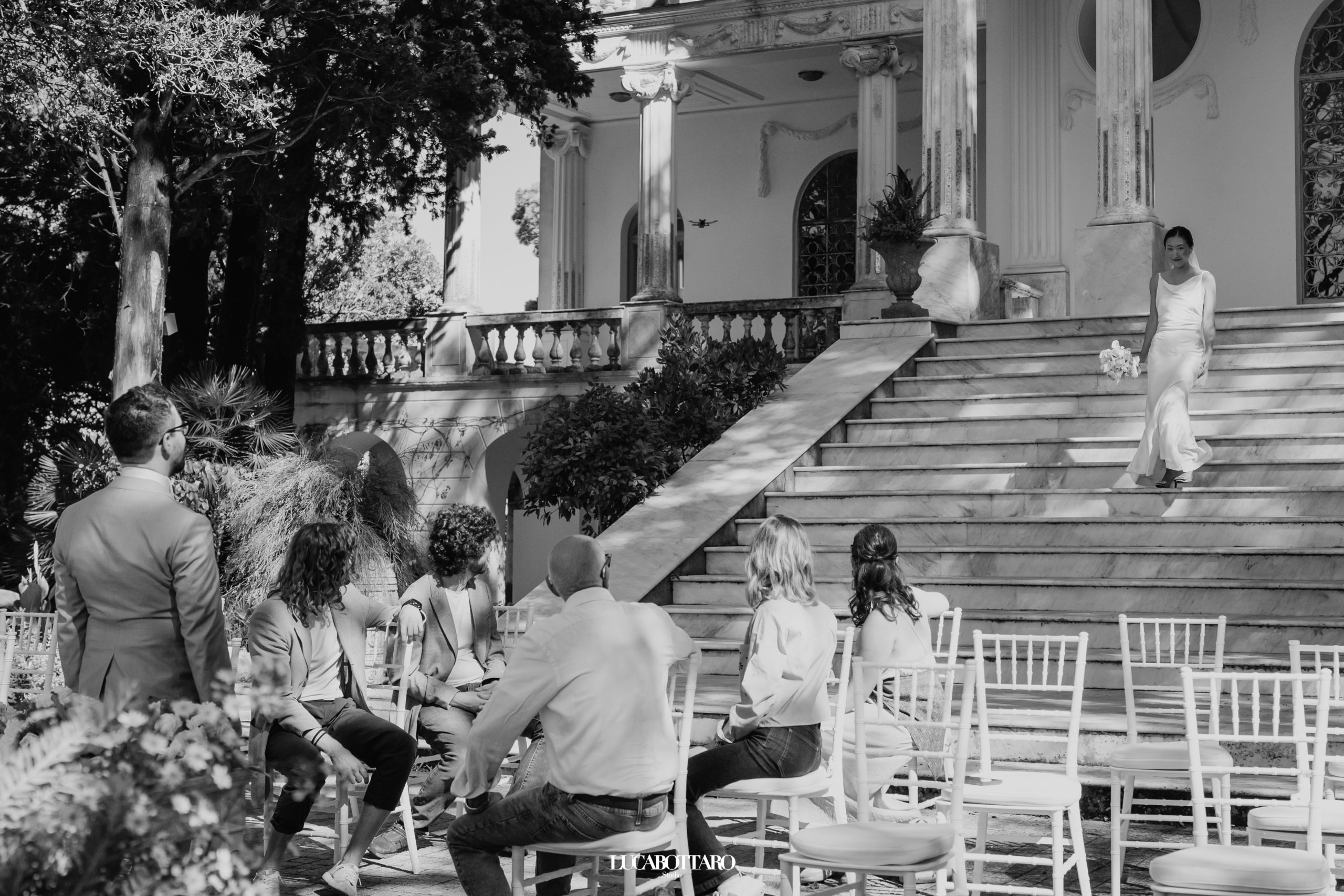
Real wedding locations in Italy you can exploreStories from the ground
Photographs say more than any checklist. Therefore, these stories show how different the same country can look.
- CapriAn island wedding where every arrival happens by boat.
- Castello Rocca CilentoA castle in southern Campania with sea and countryside views.
- Castello di LimatolaA thousand-year-old castle with exclusive use for the day.
- La Darbia, Lake OrtaA quiet lakeside setting away from the crowds.
- Grand Hotel Cocumella, SorrentoA historic hotel on the Sorrento coast.
Frequently asked questionsThe short version
Do we need to live in Italy to get married there?
No. Italy has no residency requirement for foreign couples. However, you still need the correct documents, so check the current list with your consulate or the town hall.
Is a symbolic ceremony legally binding?
No, it is not. Many couples marry legally at home and hold a symbolic ceremony in Italy.
What is the best month for a wedding in Italy?
May, June, September and early October work best. Summer can be very hot, and mid-August is a national holiday.
How far ahead should we book?
Twelve months is a sensible minimum for high season. Famous venues on the Amalfi Coast, Lake Como and in Tuscany may fill sooner.
Can we get married on Capri?
Yes, couples hold weddings on Capri every year. However, everything and everyone arrives by sea, so costs and planning time are higher. Ask the venue about legal ceremonies, or hold a symbolic ceremony and sign the papers at home.
Which region is the most affordable?
Umbria, Puglia outside peak weeks and the quieter lakes usually cost less than Capri, Positano or Lake Como. The guest count matters just as much.
Do we need a wedding planner?
Not by law. Even so, a local planner handles suppliers, permits and translations, which helps a lot when you plan from abroad.
Choose the place where you can imagine your guests relaxed, not the place that only looks good on a screen.
If you are still comparing wedding locations in Italy, I would be glad to share what I have seen on the ground. So tell me your dates, your guest count and the places you love, and we will look at the light together.
Let’s talk about your Italian wedding
Tell me your date, your guest count and the places you love. I will tell you honestly if your day fits my calendar and how I would photograph it. The fastest way is a message on WhatsApp.
Write to me on WhatsApp